


Pillars Leadership Program
AIA Kansas City's Pillars Leadership Program is a training program that prepares a representative cross section of the chapter’s emerging leaders for their role in shaping the future of both the architectural profession and the greater Kansas City metropolitan area. The training program includes active participation in programs and exposure to community leaders and issues. Applications are accepted for the program once each year. Criteria for acceptance include proven career success and community involvement. The benefits of the program include: development of relationship skills, skill development, team performance, and chapter and community leadership.
Topics that will be discussed throughout the year include: Government, Development, Community Outreach, Sustainability, Transportation, Local Arts, Food and Entertainment and Innovation and Technology.
Watch a video to learn more about the Pillars Leadership Program.
2026 - 2027 PILLARS CLASS
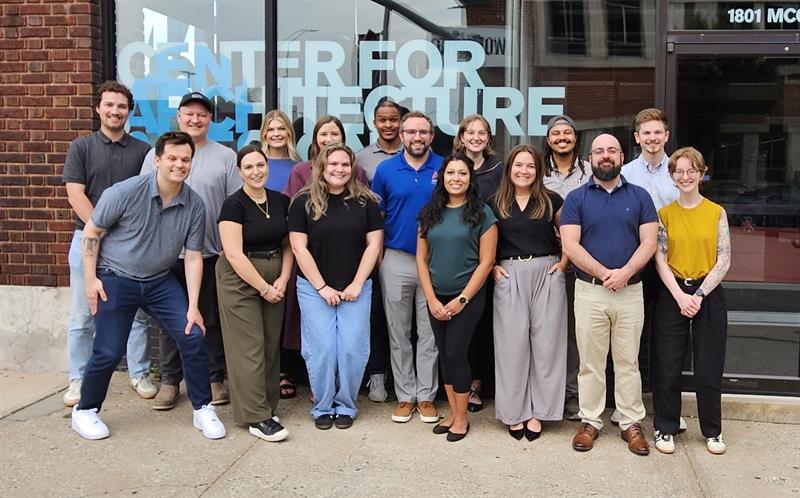 Macrina Abdouch, AIA - HOK
Maddy Alves, Associate AIA - Populous
Matthew Ayers, AIA - McCownGordon Construction
Payton Castleberry, Associate AIA - AECOM
Austin Curnutt - Apex Engineers
Nathan Dysko, Associate AIA - Populous
Sam Haney, Associate AIA - Crawford Architects
Brighid Hegarty, AIA - Black & Veatch
Tanya Jana-Ford, AIA - Perkins & Will
Lindsey Leardi, AIA - HNTB
Claire Namovich, Associate AIA - ACI Boland
Peyton Nolan, AIA - DLR Group
Megan Povirk, Associate AIA - Finkle + Williams Architecture
Rapheal Prevot, Associate AIA - Treanor
Dean Randolph, Associate AIA - PGAV
Brent Sontag, Associate AIA - Hoefer Welker
Pillars May 2026 Overview
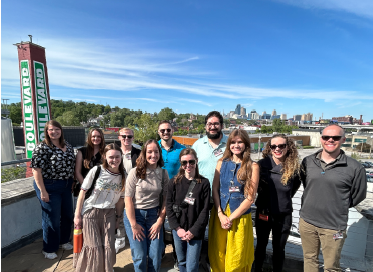 The May Pillars session explored how Kansas City’s culinary identity has been shaped by migration, industry, hospitality, and the city’s enduring love of simple, well-crafted food through conversations with food journalists and hospitality experts. The afternoon opened with Dr. Andrea Broomfield who traced the revolution of Kansas City’s food history from its earliest communities to today’s diverse restaurant scene. She described how Native American, Mexican, French, and African influences converged in the region long before the Louisiana Purchase, and how later waves of immigrants brought their own food traditions, creating a layered and evolving culinary landscape. She concludes that Kansas City’s longstanding preference for hearty, approachable, high-quality food like Mexican and barbecue is tied to the pragmatic traders of the Santa Fe Trail and the traditions of African Americans once they were free to start businesses and sell food.